Sunday, October 31, 2010

GO TERPS! (wait...what are Terps?)

Something that I was thinking about while I was working in the Tyser Tower suites during the Homecoming Football Game this weekend, was how much parents influence their children to like things that they might not even understand. While I don't necessarily think this is always bad, it's just an interesting thought. How much of our interests do we get from the influence our parents and families have on us when we're young children?


There are always those kids who grow up after taking years of piano lessons (starting when they were four...they always somehow start that early during these stories), and LOVE it. However, I wonder if this is going to be the case for the children and families I observed during the game. They might be sporting Terp gear now, and smiling at the environment of the game, but as children under five years old, do they really know what the "Terps" are? Do they really understand the excitement they're feeling, or is it just being fueled by their families?

I will show some examples below through some pictures, stories, and interpretations of the moments I captured.


In this photo, I was watching as a young child, all decked out in Terp paraphenalia, was taking a ride on his father's shoulders. He seemed to be having a fun time, and just behind him was his mother, taking a photo of her adorable son and husband. It strikes me as perfect timing because I was able to capture the mother's excitement, being at the big game with her child and husband. I think this photo in essence shows the happiness and interest parents have in their children when they're sporting (no pun intended) the same ideas and interests as they do.


This photographs is one of my favorites. In the suites, a mother with her baby kangarooed on her stomach was waiting outside the bathroom for her husband and son. I asked her if I could take a picture of her and her baby, who was wearing an adorable Terp cheerleader outfit, the perfect example of how a child is influenced by her parents to like something even before she has the mental capacity to make a decision about it herself. Instead of being uncomfortable about the idea of a stranger taking a photo of her and her baby, she replied to my inquiry with an excited, "SURE! In fact, my husband and son are here too!" Her husband was just as excited about the picture, and even asked if I could return the favor and take a photograph with their camera for them. I agreed, and of course practiced my photography skills, trying to arrange the light appropriately, and making sure to focus properly, and though I did choose to center the photo, I thought it was appropriate. What I love about this picture however was how the mother and father were looking at their child with large smiles, showing how pleased they are with him and his Terp spirit (instead of "cheese" he said, "Go Terps!").


This photo, like the previous one, features a young girl decked out in a Terp cheerleader costume. She was very difficult to take a picture of with a smile, but her father did everything he could to make her smile. She loved being at the game, but she was a lot more interested in the Halloween spirit rather than the Maryland spirit. The one thing that made her smile, and even laugh hysterically to a point where she almost collapsed to the ground in amusement, was when her father was making jokes about what you say on Halloween. "Trick or eat? Trick or feet? What is it?" he would say to her jokingly. She got more and more elated as he added more wrong phrases, and always responded, "NO! Trick or Treat!" I was intrigued by the whole scenario, especially when thinking about the angle I'm writing about in this blog post.

Tuesday, October 26, 2010

Let's Visualize Family a Bit

Family isn't perfect, and this picture shows that. This photo truly captures the essence of how the arguments between parents can have an adverse affect on their children, especially if the children are present while the argument is occuring. Given what we learned in class, the fact that the child is centered really does show something. It's symbolic of the child being in the middle of an issue, and the fact that he is below the parents could represent the idea that he isn't directly involved, and also that the parents don't care enough about his presence, or him in general since they can't take their argument elsewhere. I think this is very typical of many families, and so while to some it may be pretty generic, it also is very explanatory towards the reality that many children face at home during the course of their lives.


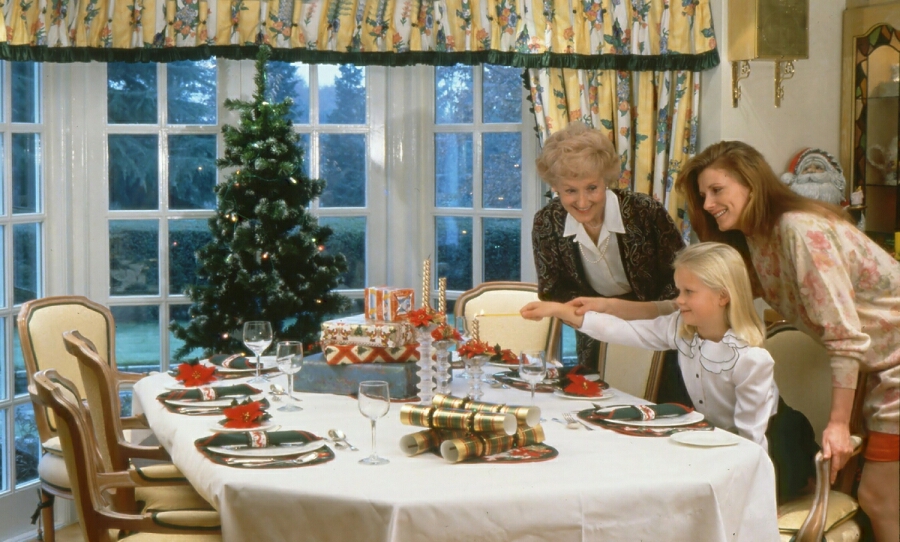
This picture is actually another side of the family that I truly enjoy. This photo shows the generational bond between family members and the happiness they feel can be connected to the time they spend together on any normal day, or even a holiday as this picture depicts. I think this photo is more than just a depiction of lighing a holiday candle, but more of the bond you can have with your mother, and your grandmother (going up in generation from the young girl) or even as the grandmother can have with her daughter and grandchild, seeing the lives she has brought into the world. You can also interpret the feelings of the mother, and how she must feel as well.

Here is a photograph I actually took myself this past summer of my two cousins Austin and Jaelyn. They are two absolutely amazing and goofy children who capture the innocence that children really are. This photo really shows happiness in it's simplicity. I think also in relation to the rules we talked about in class today in regards to photography, it works well because they are a little off centered, and the photo isn't altered at all whatsoever. In addition, the lighing is behind me (the photographer), and though you can't see it really, they are on a stage. I think the wig alone on Austin shows the goofy nature and carefree ideals of these kids, which is something I think really is a part of family. They are brother and sister, and you can tell that they have a great bond even just by looking at the photograph.

Saturday, October 16, 2010

Online Privacy and How We Affect Our Families

I'd like to recall a personal story that applies to this topic so much. My email account was hacked, and a link was sent through a message to everyone in my email address book, which included one cousin who accidentally clicked on the link. This was a horrible occurance that could have caused a lot of trouble for her, as well as for me if I had clicked on the link when it had been sent to me.

My email address was on my Facebook account, and not saying that's how the hacker was able to get into my account, but it's just an interesting connection I thought about after completing this project with my partner.

Another realization is the danger we put our friends and family in, but more so for our family members, when we make connections online through various social networking sites. Many criminals (especially stalkers) use our accounts like Facebook to figure out who are important in our lives, so if we identify family members, and significant others and close friends, we potentially put them in harm's way.

This turns a great site for keeping in touch to a stalker's homeland. So much information is accessible if you don't have security settings, but since most stalkers are friends, acquaintences, and current as well as former partners, security settings won't even help for the worst of the worst. This poses an interesting thought: should we limit what we put on our accounts, or even delete them? Or would these criminals find a way to that information in other ways as well? Is this kind of crime inevitable no matter WHAT we have online? That makes me pretty terrified for sure.

If you didn't read my previous blog post, please do, so you can see the statistics and information that lead me to these conclusions and things to ponder about.

Thursday, October 14, 2010

Stalkers: How they Use the Information WE Give Them

Stalkers: How they Use the Information WE Give Them
Natalie Gaudette and Keshauna Lewis
Partner Project Final Report

Are social networks enabling stalkers?

Stalking is all ready a major problem, but has the internet made it easier? For our project, we decided to focus on how social networks and online communities may be bringing the bad guys too close and too able to access information about us.


According to the National Center for Victims of Crime (NCVC), 3 in 4 stalking victims are stalked by someone they know. Going off that statistic, and the fact that we know of the people in our class, we decided to start with the class twitter accounts. With the class twitter accounts alone, more than ¾ of the people we were following had their full name on their account; about half had some sort of location, varying from specifics like the University of Maryland, to a more general Maryland, USA. We also did a search of students affiliated with the “UofMaryland” twitter page. The most information that seemed to be readily available was academic majors, hometowns, and current locations. Very few people had security settings so their tweets were open to the public to see. This information linked with other findings can bring a stalker dangerously close.


We then moved to Facebook, and using the information we got off of the twitter accounts, continued to search for more information about our classmates. The main link to access their pages was our network affiliations with the University of Maryland. If they were not listed in the network and we could not recognize their faces in a picture, chances are we did not find them. Most classmates had some form of security settings, such as only being able to see their personal interests and friends in common as well as photos. Our shared online network with the University of Maryland allowed us to view information such as full name and age including the year they were born, while others listed their education, employment history and current living location.


Oddly enough, there were a few students who had their phone numbers and a home address listed. Obviously, there are sights such as Google maps and other GPS sites that can bring a stalker directly to a person’s home with an address without them having to leave their computer. Not only that, there are upcoming sites such as Nabe Wise which are trying to give users a first look at a prospective neighborhood they would possibly plan on moving to. A classic example of a source a stalker can use to better acquaint him or herself with another person’s environment from information obtained through Facebook. After looking at this data it appears that being part of an online network makes us vulnerable to stalkers. Although it is a good way to get to know your peers and meet new people in your near by communities, it seems that because networks include a vast amount of people, it welcomes those with ill intentions and makes it easy for stalkers to find out where we are.


To take it a step further based on the statistic that most victims know their stalkers, and that about a third are stalked by their current or former stalkers, another angle we took was what information we could find about people by actually being “friends” with them on a social networking site like Facebook.


We chose one person in particular, and looked at every aspect of his account in the ways a stalker would if they were trying to get information about them. To start, Facebook allows users to “subscribe” to friends’ statuses. Meaning, when you “subscribe” to someone’s profile, you get a text with their status, and that text gets sent as soon as it’s posted onto their profile. There’s actually another application that possibly going through that allows you to subscribe to someone’s entire profile, so you’d get a text update about EVERYTHING that person puts on their profiles. From status updates, to posting pictures, to commenting on other people’s profiles, it’s a stalker’s dream come true (especially if the stalker is a current partner that wants to watch and control the victim’s every move).


Some things we were able to find on this particular person’s profile would be of great use to a stalker. These things are very simple, and not things that most people would think could be revealing information, but to a stalker, they can be extremely vital information. As we talked about before, statuses can notify people where you are, and what you’re doing, which can make it easy for a stalker to follow you and show up wherever you are.


Though we surprisingly found someone’s home address on their profile (which wasn’t blocked by any kind of security settings), most people only put their email address, thinking that that won’t really do much for people to do harm against others. However, according to the NCVC, 46% of stalking victims experience at least unwanted contact per week, and combined with the statistic that 1 in 4 report being stalked through the use of some form of technology, it is very obvious where emails come into play.


Another revealing aspect to a Facebook profile is your photos. Your albums can often have pictures of pets, prized items like cars, and pictures of people who are close to you like your family or friends. Because these people are tagged and also have Facebook pages that can be accessed it provides an endless trail of information. In addition, there is a theme of types of pictures that are posted by college students such as high school graduation day, college events, family vacations, and romantic relationships. These types of themes give a stalker a better idea of where to find a person base on their activities and hang out pots such as college sports games and dorm rooms. Stalkers are notorious for damaging their victim’s home, car, property (like pets), as well as family and friends.


Also, many people post their hometowns, their high school, college, and work places, making it easy for stalkers to identify information on other networking sites (including your school’s pages) that can help them to find you in person without you even knowing they’re coming. Comparing this information with the backgrounds illustrated on the photos can allow a stalker to come dangerously close.


All in all, we saw that with our research, there is a lot of information that people willingly put out there on social networking sites like Facebook, as well as many others, that can really help those out there who have malicious tendencies. This really poses the question about what you should really have on your profile. It seems as though everything we put out there could potentially victimize us, even when we do have privacy settings on our profile.


I will post a follow-up blog entry to speak on how this relates to my topic of Family Communication.


Sources:
Katrina Baum et al., (2009). "Stalking Victimization in the United States," (Washington, DC:BJS, 2009).http://www.ncvc.org/src/main.aspx?dbID=DB_statistics195

O’Dell Jolie, “Facebook testing a ‘stalker button’” (September 2010) http://www.cnn.com/2010/TECH/social.media/09/03/facebook.stalker.button.mashable/index.html

Monday, October 4, 2010

So Much for Privacy and Security...

I’d like to begin with a personal story. My family is pretty tech savvy on my dad’s side. The younger generations, as expected, have Facebooks, email addresses, YouTube accounts, and anything else you might use the internet for. So do the older generations. My relatives, who range from their 20s to their 50s, are all on Facebook, and have the potential to watch my every move.

Anytime I update a Facebook status, I’m letting my family know where I am and what I’m doing, and even what I’m feeling. This is usually fine, and doesn’t cross the line, but sometimes when I’m venting, I have to be careful. Not only could a future employer possibly hack my account and see the results of a bad fight with a relative, but likely, that relative could see a post if I’m not careful about what I say or how I restrict my profile.

I remember one time in particular when I, in a fit of rage, put a not so modest status about how one of my relatives was really irritating me, and I definitely didn’t use the kindest of words. Another relative saw this post, and was pretty offended. This one post alone sparked an hour long conversation through Facebook Inbox messages, and only after that hour were we able to come to the agreement that I had to be more careful about what I say because I can’t possibly know if someone could see it and be offended by it.

This is really related to the idea of privacy and secrecy because a long time ago, before social networking, the only way relatives could find out this same information was if they stumbled upon your diary, or overheard you on the telephone (but I always hid my diary in the best of places).

After that incident with my family, I started using the feature that Commonsensemedia.org recommends. “With Facebook’s privacy settings, you can set your viewable information to Everyone, Friends of Friends, Friends Only, or even a customizable setting that only allows you to see it.” More people need to focus on not only limiting their profile regarding what people can see, but also about what they’re posting.

Facebook isn’t the only realm of technology that can cause tension with family members. Email is yet another thing that you need to be cautious of. As Jenny Preece talks about in her article about online etiquette, one of the problems identified with poor online etiquette is “sending spam and forwarding bogus virus warnings.” As I’ve come to realize, this is a really important issue in terms of privacy. I just recently got a virus, or my account was hacked on my email, and the program of the virus took it upon itself to forward to everyone in my address book.

One of my relatives hadn’t encountered something of that nature before, so she clicked the link, at which point she said that the website tried to steal information about her in order to steal her identity.

In having the email addresses of my relatives saved on my computer, it makes it exponentially easier to distribute bad websites and spam than it would be if the internet didn’t exist. When you get a spam letter in the mail, it’s not because your relative “forwarded” it to you, and it’s easy to throw away, and most importantly, opening a letter can’t put you at risk for identity theft.

The internet can cause all sorts of problems with your family, from stress and tension because of something you say, to crime with unreliable and dangerous websites. It’s definitely something we need to start looking into more often.

SOURCES:
http://www.commonsensemedia.org/facebook-parents

Photos:
http://www.infosecwreck.com/wp-content/uploads/2010/05/facebook-privacy-settings-original.jpg
http://www.webspam.org/wp-content/uploads/2009/10/spam.jpg


Sunday, September 26, 2010

Now How about those CREDIBLE Sources?


Now that I’ve discussed the idea about bad sources, I’d like to delve right into my topic and show you how to appropriately incorporate sources into your writing (that is, once you weed out the bad ones by using the techniques I discussed in my last blog post).

Is technology causing the downfall of family? According to psychotherapist Melinda Clayton, “Family communication is in crisis. Not only are families faced with historical issues that have always challenged family communication...they’re also faced with an onslaught of technological distractions.” In Clayton’s article in the Relationships and Family: Communication section Helium.com, she notes a lot of common situations that I personally see happen all of the time.

How many times have you been in the middle of a conversation with your parents or siblings when your phone went off in your pocket? That simple event can destroy the conversation. It can not only distract the participants of the dialogue, but if you choose to leave and answer the text or phone call that just came in, you’re showing what you find to be the priority of that moment. Even by deciding to answer, you decide that the conversation between you and your family member isn’t as important as the possibilities of whatever you just received.

Dana Wollman, a writer for Laptop Magazine, wrote an article for the magazine’s website entitled “Is Technology Tearing Apart Family Life?” Wollman covers many factors including text messaging, social networking, and online video. From the beginning to the end of the article, Wollman is strategic about how she intertwines the words of many individuals with degrees in fields relating to her topic. Instead of just writing based on opinion, and quoting just anyone, the people she chose to include had actual backgrounds in the areas of discussion.

For example, Gwenn Schurgin O’Keefe, MD is a member of the Council on Communication and Media of the American Academy of Pediatrics, and was quoted saying that “We’ve let technology invade places where it never used to have a role. [Parents] think it’s their right, if they own a cell phone, they can surf the Web [anytime].” That testimony is important in the issue of family and technology because it really shows the negative effects technology is having on the family.

Dana Wollman and Melinda Clayton provided me and my blog with credible sources to look at in very different ways. While Wollman included credible people with a background in the topic, Clayton herself had that background.


Photos used:


A Word on Bad Sources


I've learned a lot recently about conducting research online. Nowadays, almost anyone can have a blog, or a website, or write an article to post online. It's become really important to analyze the sources you use when commenting on a topic when you want to show your credibility in discussing that topic. I personally conducted an online search for some good sources, and I definitely found those, but along side them, were plenty of sources that only appear credible. I've learned a lot about this form of research, and will share some techniques and things to look for to separate the good ones from the "not-so-good" ones.

When discussing family and technology, there are a lot of people who are educated and qualified in speaking on this area. The key is searching for those people. I found numerous articles from http://www.helium.com/, all of them titled "How family communication is harmed by technology." After reading through the articles, I could easily see how these articles could be viewed as credible from an untrained eye. Take Angela S. Young's article for instance. Everything in her article made sense. She was great at combining broad comments with stories from her own life, but I looked at her profile for helium.com and found that she has absolutely no background in the area of family or communication. Though she does have a Master's Degree, it's in Education, and though she has a family of her own and sees how technology affects them, she doesn't have the grounds to comment on the trends of families as a whole.

However, with further investigation of those articles on Helium, I found one that was written by Jane Evans, who has both her Bachelor's and Master's Degrees in Communication Studies. Unlike Young, Evans has a lot of background in communications, and even though she doesn't have a degree in communications in the context of families, she is still more credible than some other authors who are merely writing based on their personal stories.

I discovered another article; this one however was on a different website, http://www.clickz.com/. The website’s name in itself didn't seem credible, but I hoped that maybe I had jumped the gun in judging this website. I read through an article by Enid Burns called "Technology Brings Family 2.0 Closer" and really thought I had stumbled upon a good source. It was a relatively old source, being from 2006, and it was short, but she named a source, and included a statistic. Silly me, I should have known better. Not only is there no works cited or bibliography at the end (unless you count the brief noting of a source in her first sentence), but when I looked to get more information on Burns herself, all I got was a site that pointed me to more of her articles.

Note to self, and all of those reading my blog: always be sure to find the background of the author. If they have no background in the topic, or they don’t have one on the website at all, that’s the first red flag. Also, if they don’t site any sources, or even have a bibliography at the end of their article, that’s another red flag. Finding good sources definitely isn’t as easy as finding the bad ones, but with practice, it’ll get progressively easier in spotting the difference.
Photos from:

Sunday, September 19, 2010

Etiquette Needs to Expand from the Dinner Table

Now that more and more family members are communicating through the internet with things like e-mail and social networking sites like Facebook, there is going to be a lot more talk about online etiquette. Whether you’re Facebook chatting, or sending a text, people need to be more mindful of how they’re talking to different people.

It is one thing to send a message to a friend from class, and not include capital letters or appropriate punctuation, but for someone who grew up in the world where your hands get hit with a ruler for missing a comma, or you get detention for poor grammar, the level of online etiquette may need to be adjusted.

Jenny Preece wrote about online etiquette going from being just a nice thing you see here and there, to something that has become necessary on our world of internet use. It’s no longer about whether you look intelligent because of the grammar and technical writing methods you use, but now it’s getting more into the realm of whether or not the words you use are offensive to others.

Without the possibility of nonverbal communication, a funny joke that your uncle would take lightly in person might actually offend him because even with the addition of “LOL” it could still be taken as serious rather than kidding around. Just like we all need to be more conscious about what we’re saying online in general, we also need to be conscious about how we’re saying things online (especially to family members, who may get more easily offended than your college buddies). Etiquette needs to finally expand from the dinner table, and started reaching the cyber world.
photo from: http://bit.ly/9WH27U

Sunday, September 12, 2010

Some Things Shouldn't be Converged

The concept known as convergence is really taking over our world, especially in the world of technology. Not only is technology converging with every aspect of society, but different realms are converging with other ones, even outside of that technology zone called the “Net” in a 2005 Time Magazine Article (which you can read by following this link: http://www.time.com/time/magazine/article/0,9171,981132,00.html).

This article was really interesting to me, even though it was written so long ago. Interestingly enough, while I was reading it, I felt almost as though it was even older than five years ago. It seemed as though they were talking about the internet like it was just up and running, but I remember using it extensively when I was 10 years old, and that was in 2001, so to read this article knowing when it was actually written seemed very strange to me.

Thinking about this article in the context of convergence brings up a few thoughts for me. The same issues that the article speaks about are definitely continued today, and though some of the individual cases have been resolved, the idea of convergence in itself has intensified. More and more people are figuring out ways to abuse the internet and converge their worlds, whether that be of business and making money, or advertisement, or just plain messing with people, with technology, or other areas of society via the internet.

One part of the article that stuck out to me was a quote from Martin Nisenholtz, an advertising executive who “drew up a set of guidelines for marketing to the Net,” the first one being “Intrusive E-mail is unwelcome.” This particularly affected me recently, when I discovered that my email account had been hacked and someone, (or someone’s script) had been accessing my account and using my personal email to spread around a link to everyone in my address book that when clicked, attempts to get all sorts of identity thieving information.

It’s really sad that this is what the internet has become. It wasn’t meant to be this way. It was created to “enable academic and military researchers to continue to do government work even if part of the network were taken out in a nuclear attack.” Basically, it was meant to be an information highway, in which people could send and receive information quickly. However, instead of just adding a positive tool to our lives that we could use to simplify daily tasks, it has also created many other problems. In terms of convergence, we have now created a world in which local criminals can be converged with national, and even international, citizens.


Photo taken from: http://powerideaz.com/wp-content/uploads/2009/01/hacker.jpg

Wednesday, September 8, 2010

The Historical Context of Family and Technology

I can’t even begin to imagine what life would have been like for my family when technology wasn’t in the picture. According to an article on BBC, the postal service reached the public in 1635, removing the requirement of travel to spread the news of an engagement, or a recent birth.
By the 1870s, Alexander Graham Bell brought an even larger miracle to families, the telephone. This invention removed the waiting time between letters to know that news has reached your relatives. You might have been married for weeks or even months by the time your cousins and aunts were able to read your letter, and send you a congratulatory card. Even still, Bell’s invention was blown away a mere hundred years later when the first cell phone call was made.

Can anyone else appreciate how incredible of a breakthrough the cell phone was? Once cell phones were in the picture, so many family complications were demolished. No more waiting around when your club got out early and your family didn’t expect to pick you up for another hour. No more panic when you get stranded at the mall and want to spare yourself the embarrassment of going to the help office.

There were just so many ways cell phones improved the quality of life, or at least the difficulties of certain aspects of it. Of course, cell phones also brought on some new issues as well. I remember when I got my first cell phone at fifteen years old. It was a Trac Phone, so it wasn’t really even what I saw as a “real” phone, but it still was an extra $30 a month my family had to pay for. In addition, my younger brother, who was around seven years old at the time, complained more than ever, since whatever I had, he wanted too. My family finally caved when he was eight years old (ridiculous, I know) and I’m sure they regretted it when my brother discovered texting, and racked up a $200 cell phone bill for them to pay for.

Communication between family members has gotten exponentially easier through the years, as things like MySpace (founded in 2003) and Facebook (founded just a year later) took over our world, followed by Twitter shortly after. These new kinds of websites have made all new ways to talk to each other (as well as allowing some mild stalking between siblings, parents and children, etc.).

I love how easy it is to access pictures of the new babies in my family when I’m away at school, as well as how simple it was to follow my sister’s Tweets, but I see how these relatively new ideas of communication are being abused, and causing more issues than when the only interface for communication was writing a letter.
It’s a new world these days where you have to be careful about what you put on your social networks, and what you say in your updates. I remember a few times that friends of mine were confronted by family members at home because of their Facebook statuses, or pictures they had in their online albums. It’s great to be able to keep in touch in such an easy way, but it seems to have gotten to a point where there’s newfound lack of boundaries and privacy that we need to protect each other from.

It’s one thing to show your family the things that are going on in your life, but there comes a time when people need to learn how to adjust their settings, and other ways to hide the information you wouldn’t want your grandparents (let alone your parents) seeing.

Sources:
Photos from:
http://www.thedigeratilife.com/images/online-social-networking-2.jpg